06 Mar Peekskill’s Monumental Importance
Peekskill’s Monumental Importance:
America’s 250th Anniversary Takes Center Stage in 2026
By Joshua Anderson for the Peekskill Business Improvement District
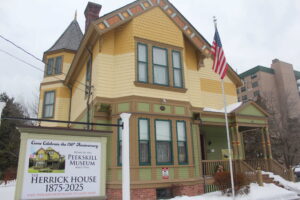 Quietly one of Peekskill’s most important historical sites, the Peekskill museum is housed in the Herrick House, an historic home which has housed its collection of Peekskill-focused historical items since 1946. Located at 124 Union Avenue, the museum is open to the public three hours each week—Saturdays from 1pm to 4 pm—and staffed by volunteers.
With 2026 upon us, the museum will focus on the 250th Anniversary of the American Revolution.
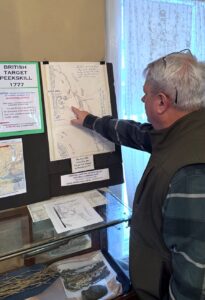
“Peekskill played a pivotal role during the American Revolution based on our location, right at the base of the Hudson Highlands,” said Tim Warn, an historian at the museum who plans to focus on Peekskill and the Hudson Highlands during the Revolutionary War.
On March 21, 2026, the Museum guides a hike up Fort Hill and presents an on-location talk presented by Warn. The following day on March 22, John Curran, president of the museum and museum historian, leads a lecture on the 1777 Peekskill Raid, to be held at the museum for those who cannot make the hike up to Fort Hill. The climb is steep and it takes about 20 minutes to arrive at the top.
Warn is a retired US Army Major and an active leader in the community who serves as the Chairman of the Board of Directors of the Hudson Valley Gateway Chamber of Commerce and on the Peekskill 250 advisory group.
Historians say the area’s geography made it one of the most strategically important locations in the colonies. General George Washington certainly recognized its importance and called Peekskill home for part of the revolution.
The region was critical because the Hudson River was a vital communications and supply link between New York City and Canada.
“If the British controlled the Hudson River and the Hudson Highlands, they could divide the continent,” said Warn.
“After the Battle of White Plains, the entire American Army moved directly to Peekskill, arriving on Nov. 10, 1776, with George Washington,” said Curran.
Peekskill became a major Continental Army encampment. Much of the area’s industry was located along the river, making Peekskill a frequent British target.
In 1777, the British would attack Peekskill successfully and force early Americans to move their supplies inland and upriver, developing Fishkill as a critical supply depot.
“The British were very efficient in their raid, destroying 50 new wagons and burning warehouses down by the river. However, Colonel Marinus Willard staged a counterattack and drove the British back to their ships and down to New York City,” Curran said.
Curran was born and raised in Peekskill and studied history in college. He specializes on the infamous 1777 Peekskill Raid.
The Peekskill Museum is actively sorting through donations and contributions to organize and better display all the history it holds. At one point the museum made a community announcement looking to collect artifacts and historical items. The response was large.
“They loaded up the attic with boxes and containers and furniture and knickknacks and just a variety of things that we’re still dealing with,” Warn said with a humorous tone as he described the overload.
From retired military like Warn to lifelong residents like Curran, Peekskill’s role in the American Revolution is not preserved just in battlefields or monuments, but through a museum run by passionate individuals.
“We’re a not-for-profit. We rely on donations to keep the lights on, one of our biggest challenges is maintaining this history because it’s so vital,” said Warn.
“What we lack is any kind of continuous government support,” said Curran.
The museum offers memberships for students, seniors, individuals, families and businesses and accepts larger, sustaining donations as well.
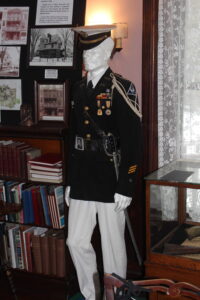
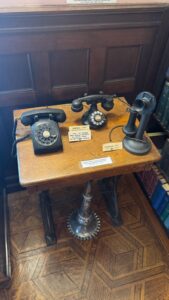
The Herrick House was built between 1877 and 1878 before becoming the Museum and later getting refurbished in 2011. The building retains an authentic historical atmosphere, through the creaks in the halls to the military memorabilia. The museum houses a treasure trove of artifacts.
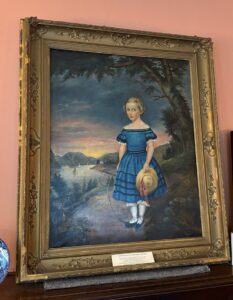
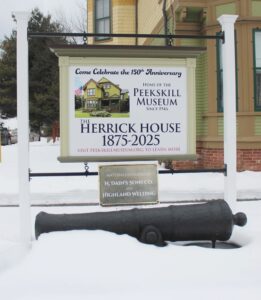
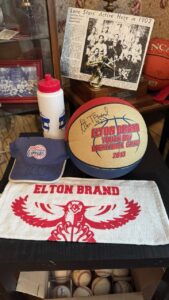
The Museum is staffed by a group of volunteers who oversee the massive historical significance of Peekskill and have made huge efforts to ensure that it’s remembered and preserved. Artifacts range from Revolutionary War muskets and cannonballs to modern memorabilia, including a downhill racer sled and a basketball signed by Peekskill High School grad and NBA player Elton Brand.
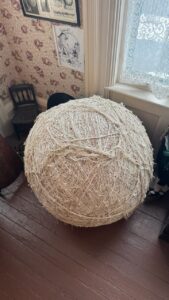
A fan favorite is also the comically massive ball of string that sits on the second floor, that was, at one point in history, thought to be the largest in the world.
Limited staffing restricts public hours, though visits can be scheduled by appointment in addition to the Saturday openings.
Two and a half centuries after soldiers defended the Hudson Highlands, their story is still being guarded — this time by neighbors, retirees, and a small museum on Union Avenue in Peekskill, NY.
“We have to remember our history, what brought us here,” said Warn.
You can reach the museum at (914) 736-0473, peekskillmuseum.org, or on Facebook.
(C) 2026 Peekskill Business Improvement District. Photos by Joshua Anderson. Edited by Bill Powers. If you are a downtown destination business and would like to be considered for an upcoming profile article, please email us at peekskillbid1@gmail.com.